Friday, December 31, 2021

Podcast Episode 27 - Teddy Roosevelt's Third Term, Part XI


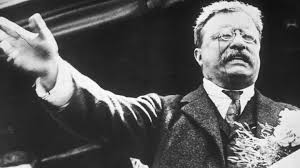
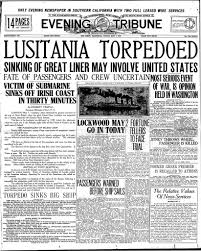
There was no way Woodrow Wilson was going to let former President Theodore Roosevelt anywhere near Europe during the First World War.

Teddy had made multiple requests to War Secretary Newton Baker, asking permission to raise a division of volunteers, with himself as a major general, "to put our flag on the firing line."


But what Wilson actually feared was that Teddy, upon his arrival in Europe, would be drafted into chairing a peace conference. By 1916 the military situation had reached a stalemate of trench warfare and pointless killing. The Germans had made some initial peace overtures. 

If the man who had successfully negotiated an end to the Russo-Japanese War only a decade earlier showed up, the "vital hold which personalities like Roosevelt have on popular imagination," as Georges Clemenceau told Wilson, might just get all the warring parties to the peace table and end the war. 

Woodrow Wilson, who lacked Teddy's "vital personality" and international stature, did all he could to keep Teddy home. 

If Teddy couldn't fight, he was going to send his four sons in his place. 


Sources

American Magazine. “The Reformers." Retrieved December 29, 2021 from https://www.americamagazine.org/issue/culture/reformers

HistoryNet. “Aviators: Quentin Roosevelt – He Died Fighting.” Retrieved December 29, 2021 from https://www.historynet.com/aviators-quentin-roosevelt-he-died-fighting.htm

Morris, Edmund. “Colonel Roosevelt.” Random House, 2010.

Roosevelt, Theodore. “Autobiography of Theodore Roosevelt.” 
 

Sunday, December 26, 2021

Podcast Episode 26 - Teddy Roosevelt's Third Term, Part X


Theodore Roosevelt was down in the dumps in 1916. The world was on fire. The country, with either Wilson or Hughes destined for the White House, was “in the hands of two aloof and cagey deliberators. Wilson and Hughes were men who waited for events to happen and then reacted.” Teddy saw things coming, and got ready.

But as happened in 1912, Teddy allowed his candidacy, and his potential third term, to be derailed in the “smoke-filled room” of the nominating convention. He let party insiders, many with presidential ambitions of their own, talk him out of running, and he surely didn’t help himself by doing the same thing he accused Wilson of doing in Mexico: taking one step forward and two steps back.


He forgot that his true power came from the American people. In time of war, the best argument to get or retain the presidency was experience in office—it was an argument Teddy’s “fifth cousin by blood and nephew by marriage” would use decades later to win four terms in the White House. In 1916, only two men had the kind of experience the country knew it needed—Wilson and Roosevelt.

But Teddy allowed his emotions to get in the way, and his political shrewdness and canny assessment of the mood of the people was lost in a wave of self-pity. 1904 Theodore Roosevelt went after what he knew to be best for the nation. 1916 Teddy waited to be asked, not by the people, but by cynical party insiders. And he let his temper get the best of him.

As President Wilson had once said about Teddy, “The way to treat an adversary like Roosevelt is to gaze at the stars over his head.”

Woodrow Wilson’s chances in 1916 were looking pretty good.


Sources

History. “U.S. Entry Into World War I.” Retrieved December 22, 2021 from https://www.history.com/topics/world-war-i/u-s-entry-into-world-war-i-1

Morris, Edmund. “Colonel Roosevelt.” Random House, 2010.

Morris, Edmund. “Theodore Rex.” Simon & Schuster, 2006.

Roosevelt, Theodore. “Autobiography of Theodore Roosevelt.”
Wikipedia, “United States Involvement in the Mexican Revolutuion.” Retrieved December 24, 2021 from https://en.wikipedia.org/wiki/United_States_involvement_in_the_Mexican_Revolution


Saturday, December 11, 2021

Podcast Episode 25 - Stubborn Nags of Ancient Rome - Part IV


Rome’s greatest orator pointed his finger at Cato the Younger and said, “Do you not see a storm coming?”


Marcus Tullius Cicero was consul for the year 63 BC, and thanks to the aforementioned storm, was a virtual dictator. But he had a number of problems, and he was going to use Cato the Younger to try and solve them.

Here’s the thing: it wasn’t just one storm.


Cato ran for his first office in 67 BC—military tribune. This would put him in command of a legion of about four thousand troops and pave his way to a Senate seat when his year was up.

 He campaigned for his first office at a time when the average Roman-on-the-street was feeling pretty nervous about the state of the Republic. Rome’s success had come, in part, from its ability to learn and adapt, to see what worked and make it their own. Military formations and tactics, education, politics, engineering, territorial conquest and management—the Romans were great learners. The problem was that the lessons currently being taught were the ones that would ultimately end the Republic.

He won his election and went to take command. Like his famous great-grandpa, he shared his men's hardships and they loved him for it. 

When the year was up, he went back to Rome and took over the Treasury, calling in old debts and paying off others. But his moral handling of the public trust didn't survive past his term in office. 

Back in the throes of corruption, a new populist arose - Catiline - who proposed cancelling all debts and redistributing land to the poor. The elite of Rome freaked out, and backed another "man of the people" candidate to beat him - Cicero, Rome's greatest orator. 

But Catiline didn't give up, and planned to take the city by force.

Cicero and Cato were going to have to team up to stop him. 

Sources 

Beard, Mary. “SPQR.” Profile Books, 2015.

Duncan, Mike. “The Storm Before the Storm: The Beginning of the End of the Roman Republic.” Public Affairs, 2017.

Goodman, Rob and Soni, Jimmy. “Rome’s Last Citizen: The Life and Legacy of Cato, Mortal Enemy of Caesar.” St. Martin’s Press, 2012.

Wikipedia, “Cicero.” Retrieved December 2, 2021 from https://en.wikipedia.org/wiki/Cicero

Wikipedia, “Cato the Elder.” Retrieved September 14, 2021 from https://en.wikipedia.org/wiki/Cato_the_Elder.

Wikipedia, “Gaius Marius.” Retrieved September 14, 2021 from https://en.wikipedia.org/wiki/Gaius_Marius

Wikipedia, “Spartacus.” Retrieved December 11, 2021 from https://en.wikipedia.org/wiki/Spartacus

Wikipedia, “Stoicism.” Retrieved November 4, 2021 from https://en.wikipedia.org/wiki/Stoicism

Wikipedia, “Sulla.” Retrieved September 14, 2021 from https://en.wikipedia.org/wiki/Sulla

Saturday, November 27, 2021

Podcast Episode 24 - The Most Dangerous Man In America, Part II

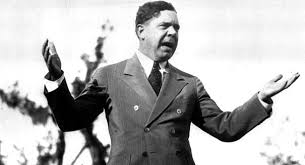
Lousiana governor Huey Long had learned a lot from his impeachment trial, and it was no more Mr. Nice Governor down in the bayou.

He wanted to expand a road-building program and build a new massive state capitol building as a lasting monument to his reign. The legislature (and Huey's own brother) opposed the plan, so Huey had to come up with a way to persuade them, and make sure he retained power.

His answer: he was going to run for the United States Senate.

But there were two men who had damaging secrets about the governor, and something had to be done about them before the election.

So Huey had them kidnapped.


He had the Louisiana Bureau of Criminal Identification, which was essentially his private police force, arrest the two men in the middle of the night and hide them away from the press, as well as the Federal agents called in to investigate.


Huey kept them under wraps until after the Senate race was over, which he won, using a number of electoral shenanigans like ballot box stuffing and registering trees to vote.

After the election, Huey began signing his name ‘Huey P. Long, Governor and Senator-Elect.

Check out this episode of the History's Trainwrecks Podcast:


Sources

Long, Huey P. “My First Days In The White House.” Pickle Partners Publishing, 2016.


White, Richard D. “Kingfish: The Reign of Huey P. Long.” Random House, 2009.


Wikipedia, “Paul N. Cyr.” Retrieved November 27, 2021 from https://en.wikipedia.org/wiki/Paul_N._Cyr

Saturday, November 20, 2021

Podcast Episode 23 - Tractors For Fidel Castro

The Bay of Pigs invasion was, to coin a phrase, a train wreck.

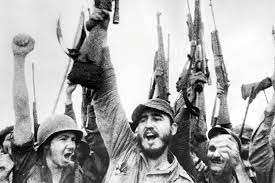
Fidel Castro had come to power in Cuba in 1959, planting a Communist country right on America’s back porch. Having a Soviet satellite ninety miles away from American soil was, shall we say, troubling.

The Eisenhower Administration approved a CIA plan to train Cuban exiles and provide them with weapons and air support for an invasion of the island. The expectation was that the Cuban people would rise up in rebellion and topple the Castro regime.

The train went off the tracks pretty early. Despite efforts to keep the mission a secret, the invasion plan was widely known among the Cuban community in Miami. Castro’s intelligence service found out about the training camps the CIA had set up in Guatemala, and some of the details of the plans made it into the press.

Fidel Castro was not going to be surprised.


The invasion failed, and Castro took 1200 prisoners. In return, he wanted a bunch of tractors. 

This was going to get interesting. 

Check out this episode of the History's Trainwrecks Podcast. 


Sources

Michaelis, David. “Eleanor.” Simon & Schuster, 2020.

No Writer Attributed. “Tractors for Castro.” The Harvard Crimson, 1961. Retrieved September 8, 2020 from https://www.thecrimson.com/article/1961/5/31/tractors-for-cuba-pfidel-castros-offer/

SMITH, THOMAS G. “Negotiating with Fidel Castro: The Bay of Pigs Prisoners and a Lost Opportunity.” Diplomatic History, vol. 19, no. 1, 1995, pp. 59–86. JSTOR, www.jstor.org/stable/24912438. Accessed 8 Sept. 2021.

“The Bay of Pigs.” John F. Kennedy Presidential Library and Museum.


Saturday, November 13, 2021

Podcast Episode 22 - Teddy Roosevelt's Third Term, Part IX


Former President Theodore Roosevelt was in a weird mood.

He had come in second in the presidential election of 1912, which meant he had nothing to do on March 4th of the following year while Woodrow Wilson was being sworn in.

So he went to an art exhibition.

This is probably a good time to mention that he was mostly blind in one eye.


As had become his practice after, shall we say, NOT winning a presidential election, Teddy left the country. He didn’t trust himself to stay quiet while Woodrow Wilson did things he didn’t approve of: removing African-Americans from the federal bureaucracy, passing a pro-business tariff, and developing an isolationist and pacifist foreign policy.


He warned his cousin Franklin to keep the fleet together in case of the war he could see coming, and then went to South America.

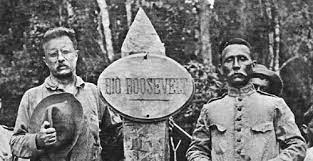
Like his African trip in 1909, Teddy’s journey to South America had a number of items on the agenda: scientific study of flora and fauna, the usual slaughter of native beasts for sport, and a way for him to make some money. He told his wife that he “expected to clear $20,000 over the next six months.”

And, like his African trip, Teddy was putting himself firmly in harm’s way. It’s not inconceivable that somewhere in his subconscious was the notion that he might end his life, which now seemed without purpose, in the midst of the kind of action that made him feel most alive.

Theodore Roosevelt did not think he should die in his sleep.

He nearly got his wish on this post-election trip south of the equator.

Check out the episode to find out what happens to Teddy while on the River of Doubt. 


Sources

Morris, Edmund. “Colonel Roosevelt.” Random House, 2010.

Morris, Edmund. “Theodore Rex.” Simon & Schuster, 2006.

Roosevelt, Theodore. “Autobiography of Theodore Roosevelt.”
Saturday, November 6, 2021

Podcast Episode 21 - Stubborn Nags of Ancient Rome, Part III

It's 81 BC, and ancient Rome is under the control of the drunken bloodthirsty dictatorship of Cornelius Sulla. 

There were three things you could do - be on Sulla's side and live, oppose him and get exiled, or oppose him and get your head stuck on a pike in the Forum. 

Cato the Younger, fourteen years old, was taken under Sulla's wing for a front-row seat to the bloodbath. 


Rome's problems didn't end when the dictator drank himself to death. 

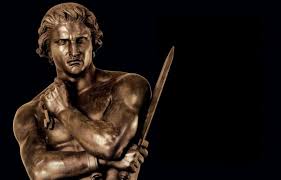
Spartacus, a former slave and legionnaire, raised a huge rebel army in the city's back yard, the renegade general Sertorius had essentially taken over Spain, and annoying old Mithridates was taking a third swing at the Roman pinata. 

Cato the Younger found plenty of opportunity for career advancement in these tense times. 

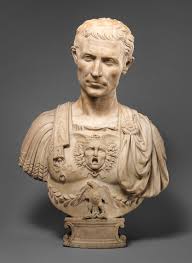
But so did Julius Caesar. The two of them were now on a collision course. 

Take a listen to this episode of the History's Trainwrecks Podcast:


For more stories like this check out The History’s Trainwrecks Podcast at the links below:
Beard, Mary. “SPQR.” Profile Books, 2015.

Duncan, Mike. “The Storm Before the Storm: The Beginning of the End of the Roman Republic.” Public Affairs, 2017.

Goodman, Rob and Soni, Jimmy. “Rome’s Last Citizen: The Life and Legacy of Cato, Mortal Enemy of Caesar.” St. Martin’s Press, 2012.

Wikipedia, “Cato the Elder.” Retrieved September 14, 2021 from https://en.wikipedia.org/wiki/Cato_the_Elder.

Wikipedia, “Gaius Marius.” Retrieved September 14, 2021 from https://en.wikipedia.org/wiki/Gaius_Marius

Wikipedia, “Stoicism.” Retrieved November 4, 2021 from https://en.wikipedia.org/wiki/Stoicism

Wikipedia, “Sulla.” Retrieved September 14, 2021 from https://en.wikipedia.org/wiki/Sulla