Friday, October 14, 2022

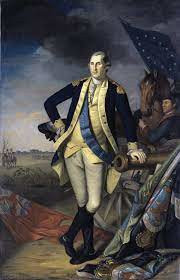
Podcast Episode 52 - The Men Who Would Be Washington, Part III

If Charles Lee was alive today, he would be considered a master networker.

That guy knew EVERYBODY.

As we’ve seen in prior episodes, Charles was pals with a few kings and kings-in-waiting like Stanislaus of Poland, Frederick I of Prussia and his son, future king Frederick Wilhelm, as well as Holy Roman Emperor Joseph II. He wasn’t a fan of King George III, but still managed to get a meeting with him.

Like any modern-day Wall Street capitalist on the make, Charles Lee could ALWAYS get the meeting.

With all these movers and shakers on his side, Charles was a front-runner for one of the top jobs in the upcoming war with Britain: Commander in Chief of the Continental Army. 


But there was ANOTHER fellow who also wanted the job, and he was willing to overlook the fact that Charles still owed him fifteen bucks from that time he and his dogs mooched at Mount Vernon and made Martha mad.   


Wednesday, October 5, 2022

Podcast Episode 51 - The Men Who Would Be Washington, Part II

Major General Charles Lee was a complainer.

It didn’t start when he joined the Continental Army in 1775. Charles was predisposed to crabbiness. His father was a British major general and his mother was descended from landed gentry. He was the youngest child, and the only son to survive to adulthood. A place of stature had been carved out for Charles, and he meant to have it.

He pursued a career in the British Army and served in the colonies during the French and Indian War, where he met George Washington and Thomas Gage. When the war was over he went adventurin', getting into duels, hanging out with kings, and sticking it to the Ottoman Empire, which is always a good idea. 


But his complaining, about his superiors in the army and THEIR superior, King George III, meant that England was a bit too hot for Charles. So he and his little dog went to America to see what kind of trouble they could get into. 

Which in part meant, just maybe, being appointed commander of the Continental Army instead of George Washington. 


Friday, September 23, 2022

Podcast Episode 50 - The Men Who Would Be Washington, Part I

Was George Washington truly America's indispensable man? 

John Adams thought so, and lots of later historians agreed. Washington had the qualities the country needed at the time - dignity, gravitas, and integrity. He was perceived to be above the kind of petty squabbles that would doom the newborn republic. 

But things very nearly didn't go his way. After his defeat at the Battle of New York in 1776, the war, and with it the Revolution, was nearly over. 

Had Washington not managed to get things back on track, there were a few other commanders who would have been quite happy to take the top spot. 


Washington saved the day with a couple of surprise wintertime attacks, but things had a way of turning against him. 

1777 saw a string of British victories, except for one smashing battle won by the Americans. The only problem - George wasn't the general who won the victory. 

Uh oh. 


Sources

Ellis, Joseph J. “His Excellency: George Washington.” Alfred A. Knopf, 2004.


George Washington’s Mount Vernon. “The ‘Indispensible Man’: Would the Revolution Have Succeeded Without George Washington?” Retrieved September 23, 2022 from https://www.mountvernon.org/george-washington/the-revolutionary-war/was-washington-the-indispensable-man/would-the-revolution-have-succeeded-without-george-washington/


Saturday, September 17, 2022

Podcast Episode 49 - The Most Dangerous Man In America, Conclusion

I’m trying to figure out who REALLY killed Huey Long.

Don’t worry. Your favorite history podcast hasn’t suddenly turned into a true crime show. Neither has this one.

We know who actually pulled the trigger: Carl Weiss, aged thirty. He was a quiet fellow who loved art and music and math and had gotten his medical degree in Paris. His wife Yvonne had recently had a baby. She was the daughter of Benjamin Pavy, a judge that Huey Long was forcing out of office. Huey claimed that the Pavy family had “coffee blood,” which is just the kind of racial slur you think it is. Huey had also fired Yvonne’s uncle, a school principal, and her sister, a third-grade teacher.

It could very well be that Carl Weiss, a student of art and history, saw himself as a modern-day Hamlet avenging his in-laws’ honor, knowing that when it comes to getting rid of dictators, there are very few options. Mostly one option.

But if this was a true crime podcast, which I hear are super-popular (just wait till I get to the trainwreck that is the Kennedy assassination) I would have to speculate that Carl Weiss might just have been the patsy, the tip of someone else’s spear.

Because there were lots of people who wanted to kill Huey Long.


Huey was killed by an assassin's bullet. His last words were "God, don't let me die. I have so much to do."

He died on September 10, 1935, but his political machine controlled Louisiana politics until the 1960's. His son served in his father's Senate seat from 1948 to 1987. 

His legacy in Louisiana lives on. 


Sources

White, Richard D. “Kingfish: The Reign of Huey P. Long.” Random House, 2009.


Wikipedia, “Huey Long.” Retrieved September 17, 2022 from https://en.wikipedia.org/wiki/Huey_Long


Friday, September 9, 2022

Podcast Episode 48 - The Most Dangerous Man In America, Part V


“Imagine ninety-five Senators trying to outtalk Huey Long,” Will Rogers wrote in 1933.

Huey had lost patience with the United States Senate. Which was okay – they were fed up with his antics, too, and he had only been a Senator for a year or so. They wanted no part of his wealth redistribution plan, loud suits, cigars, and complete lack of personal boundaries. Huey could talk the sun down every day, but his ideas were never going to be made into law.

“A mob is coming to hang the other ninety-five of you scoundrels,” he warned his Senate colleagues. “And I’m undecided whether to stick here with you or go out and lead them.”

It turns out that Huey wasn’t really THAT undecided.


Huey Long was losing political control of Louisiana, thanks to the Depression-era policies of the new President. Federal jobs, which were literal lifesavers, were given to Huey's opponents.

Huey's own dictatorial behavior was costing him support among the people of the state, so he took his show on the road, appealing to masses of poor Americans and fueling the fire for a 1936 presidential run.

FDR's Justice Department started investigating Huey's financial shenanigans, a trick that had worked on Al Capone, but that was taking too long.

Something permanent was going to have to be done about Louisiana's Senator, and his enemies started making assassination plans.


Friday, August 19, 2022

Podcast Episode 47 - Top Ten Trainwrecks, Part II

We're counting down to number one - the biggest historical trainwreck of all time.

Can you guess who it is?

Check out the Beyond The Big Screen Podcast at the link below.

https://www.atozhistorypage.com/beyond-the-big-screen/

George McClellan
Aaron Burr
Marcus Crassus
Douglas MacArthur


Saturday, August 13, 2022

Podcast Episode 46 - Top Ten Trainwrecks, Part I

I love a good trainwreck. I mean, who doesn’t?

One day, historian and podcaster Steve Guerra, host of the Beyond the Big Screen Podcast, asked me what I call The Big Question: of all the trainwrecks you’ve studied so far, who is on your top ten list of all time?

It gave us the opportunity to better define a historical trainwreck, and it got us thinking about who wasn’t on the list and who should be.

Long time listeners of this show may not be surprised at the list, but then again…maybe you will.


.